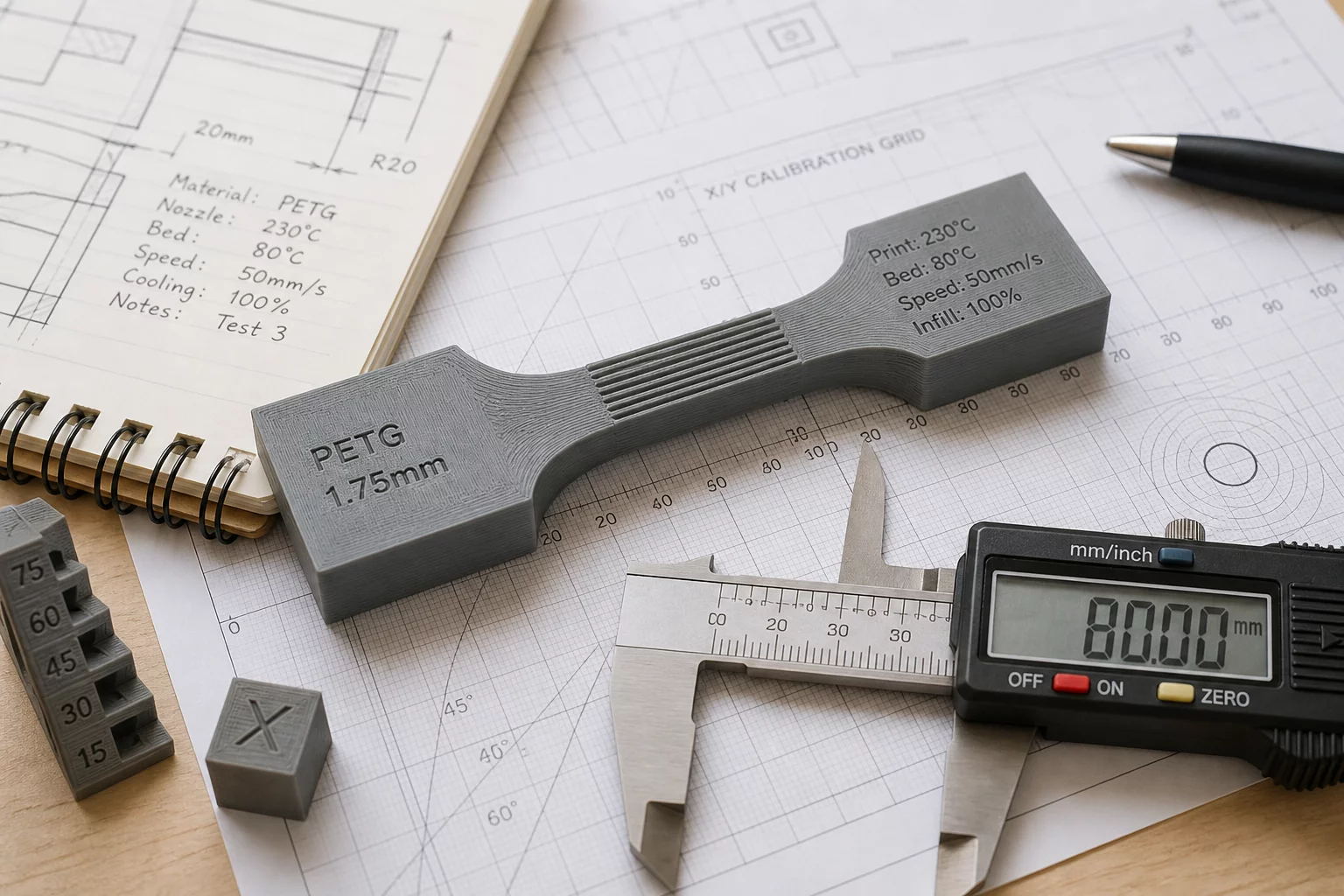
Systematic Prototyping Through Disciplined Verification
PartTrial Workbook exists to eliminate random slicer guesswork by providing structured logging templates, coupon validation methods, and clear pass-fail criteria for additive manufacturing.
The Core Thesis
Physical prototyping in additive manufacturing frequently suffers from aimless parameter tweaking. Slicing an entire assembly repeatedly wastes time, energy, and spools of filament without producing definitive engineering insight.
PartTrial Workbook was designed around a single empirical standard: One print. One question. One observable result. Every physical test run must have an isolated variable, a predefined pass-fail threshold, and a registered conclusion before slicer parameters are touched again.
Built for Additive Workflows
Whether testing cantilever overhangs, snap-fit deflection tolerances, or anisotropic layer adhesion under shear stress, this platform provides systematic templates and structured evaluation logs for hardware creators.
Instead of relying on guesswork, teams create a repeatable audit trail of test coupons. Every trial specimen answers a distinct mechanical question, enabling rapid knowledge transfer across project contributors.
Who PartTrial Workbook Serves
Designed to bring clarity and rigorous documentation to makers and engineers across diverse physical computing and manufacturing contexts.
Product Designers
Isolate mechanical clearances and aesthetic surface finish metrics before committing to tooling or full assembly prints.
Prototyping Teams
Maintain shared test logs across multi-user lab printers, preventing duplicated failures and fragmented trial records.
Students & Makers
Master thermal, dimensional, and material science concepts through disciplined, single-variable physical experimentation.
Small Manufacturing
Validate material batches, nozzle diameters, and dimensional repeatability for short-run custom production components.
Interactive Hypothesis Tester
Select a typical additive prototyping challenge below to see how our single-variable method isolates the test scope before sending G-code to your machine.
Will decreasing layer height from 0.20mm to 0.12mm resolve overhang drooping without adjusting fan speed?
15mm stepped angled wedge. Print temperature locked at 210°C, cooling at 100%.
Visual surface inspection under 10x loupe; zero delamination or drooping loops past 55°.
Standard Workbooks
Explore pre-configured worksheets covering dimensional calibration, stringing, and strength tests.
Case Studies
Read verified trial histories from hardware teams resolving real-world additive prototyping hurdles.
Get in Touch
Share experimental setups, propose template formats, or consult with our prototyping team.