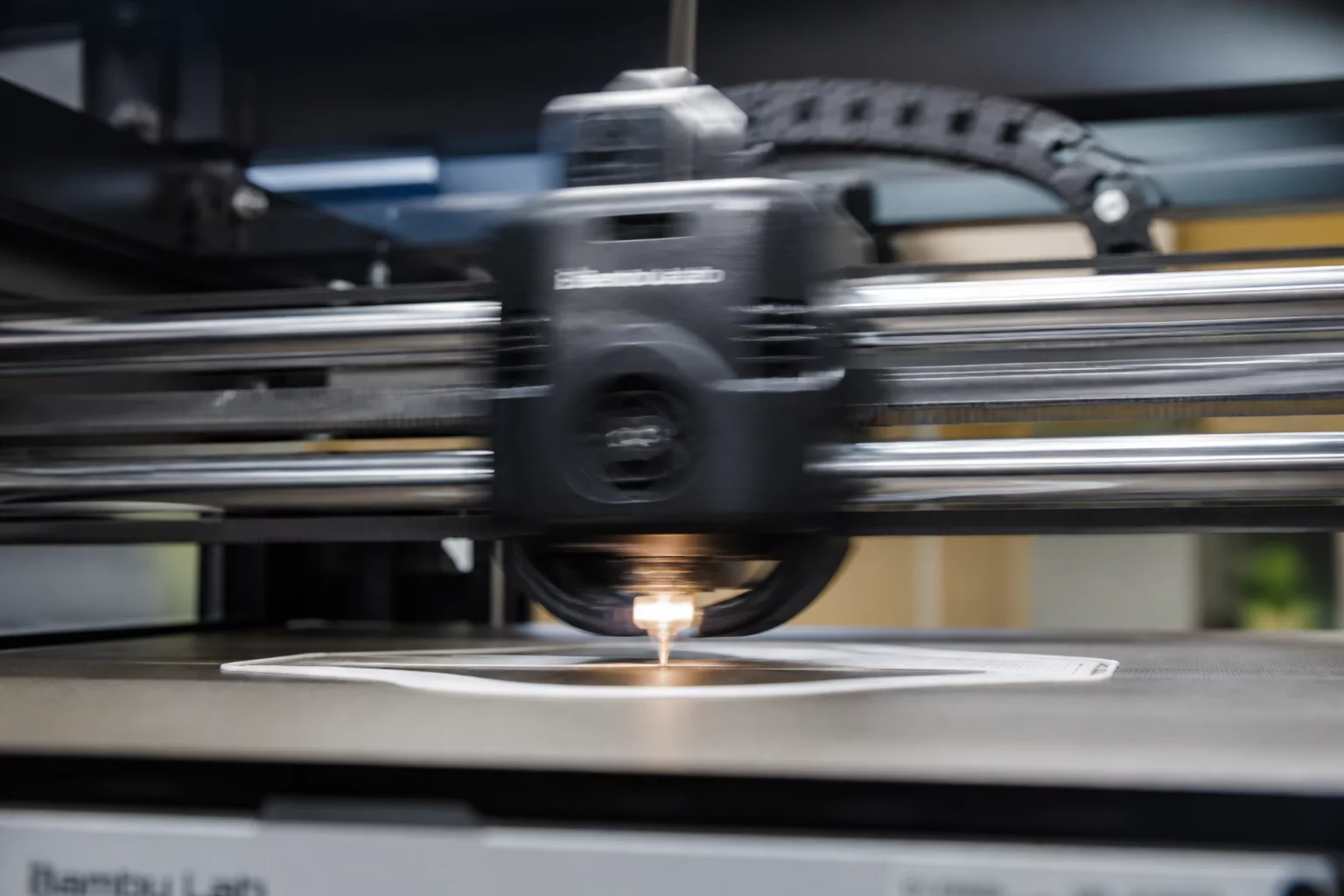
1. The Physical Question & Hypothesis
Hypothesis: Increasing hotend temperature from 205°C to 220°C enables eSUN PLA-HF to maintain full inter-layer bonding and dimensional stability at 280 mm/s print speed without micro-voids or corner ringing.
High-speed printing on rapid prototyping rigs frequently leads to cold core under-extrusion when the printhead moves faster than 200 mm/s. As the filament spends less time inside the melt zone, standard temperatures fail to fully liquefy the polymer core, creating weak layer bonds and rough surface textures. This trial directly answers whether raising thermal transfer compensates for speed increases while keeping geometric tolerance within ±0.05 mm.
2. Isolated Variable & Controlled Matrix
Following our single-variable method, all cooling profiles, acceleration limits, and retraction distances were frozen. Only the external perimeter speed and the hotend temperature were adjusted to observe flow consistency across standard test geometry coupons.
| Parameter | Baseline Setting | Trial Value | Control Status |
|---|---|---|---|
| Nozzle Temperature | 205°C | 220°C | Fixed |
| External Perimeter Speed | 70 mm/s | 280 mm/s | Tested |
| Layer Height | 0.20 mm | 0.20 mm | Fixed |
3. Observable Result & Measurement
The specimen was removed from the textured PEI bed after thermal cooldown to 25°C and inspected under calibrated optical microscopy and a digital caliper rig.
- Zero visible delamination or corner swelling across sharp 90-degree outer boundaries.
- Volumetric throughput sustained 24.8 mm³/s with zero extruder motor skipping or backpressure grinding.
- Wall thickness deviation stayed within +0.03 mm across all four vertical test faces.
4. Next Iteration Decision
Lock the 220°C hotend temperature and 280 mm/s speed profile as the verified baseline preset for high-speed PLA-HF prototype runs. The next sequential trial will test 45-degree overhang cooling thresholds at 320 mm/s using the same specimen batch.
Specimen Observation Logs
Peer verification and engineering trial feedbackThe systematic worksheet approach completely eliminated guesswork on our snap-fit latch trial. Documenting one variable per run prevented us from wasting an entire spool on failed dimension calibrations.
Append Engineering Observation